Isuru Memorial

Isuru Memorial

Memory Beyond the Monument
Why memorials should be lived spaces rather than places visited only on commemorative days.
Location
ISURU, SHIVAMOGGA, KARNATAKA
Typology
Specialised
Scale
small
Site Area
0.5 Acres
Built Up Area
3,230 SQ.FT
Timeline
2021–2023
Status
COMPLETED 2023
Client
GOVERNMENT OF KARNATAKA
Team
Poorvik Patel, Hitha Kamal, Prajwal Amin, Abdul Rahman, Preeti Nandagopal, Vignesh Varma, Reva Saxena, Bhushan, Sathisraja, Ranjitha, Aboli Wasule, ALok Shetty
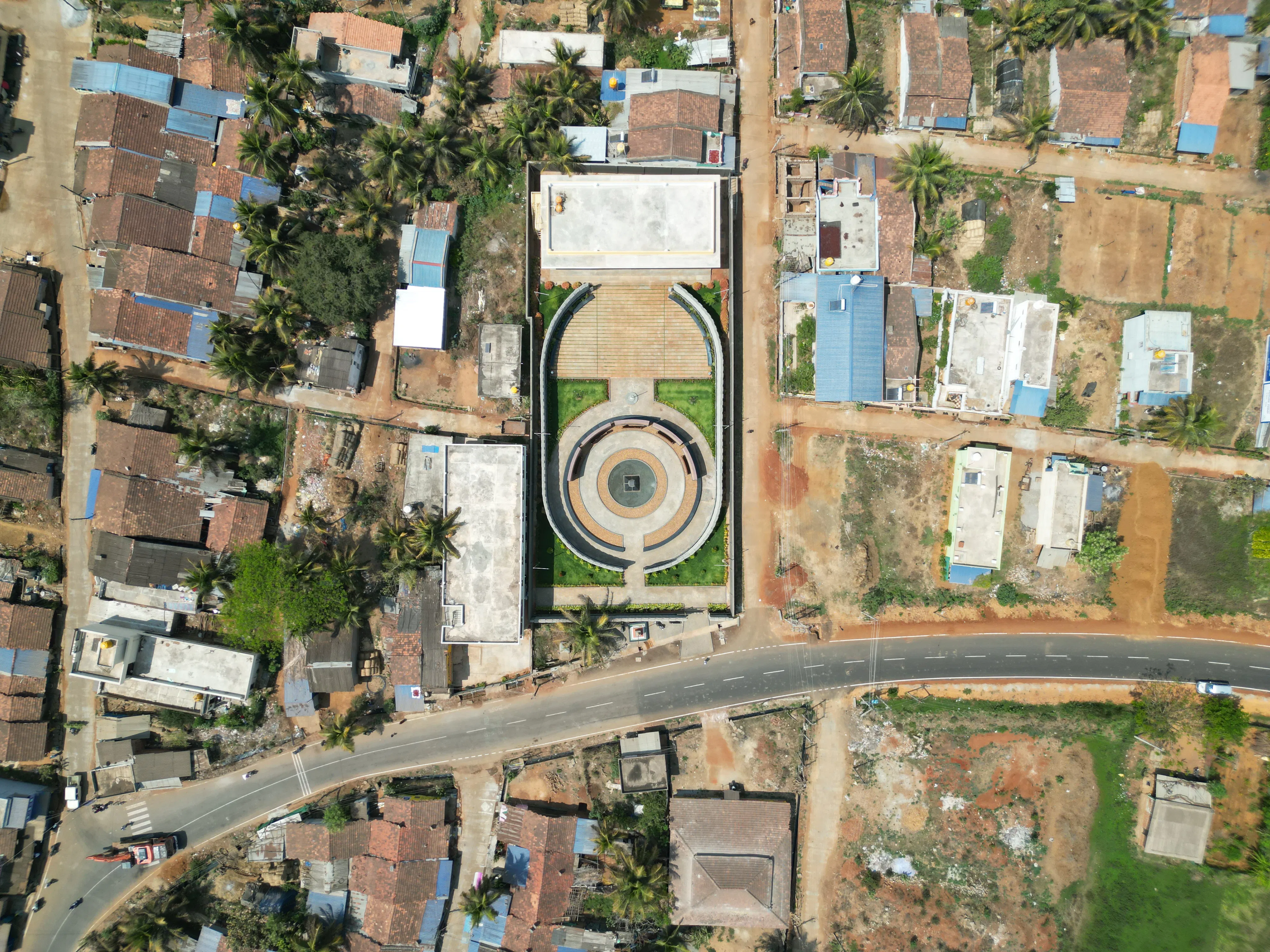
SITE PLAN & CONTEXT
SITE PLAN & CONTEXT
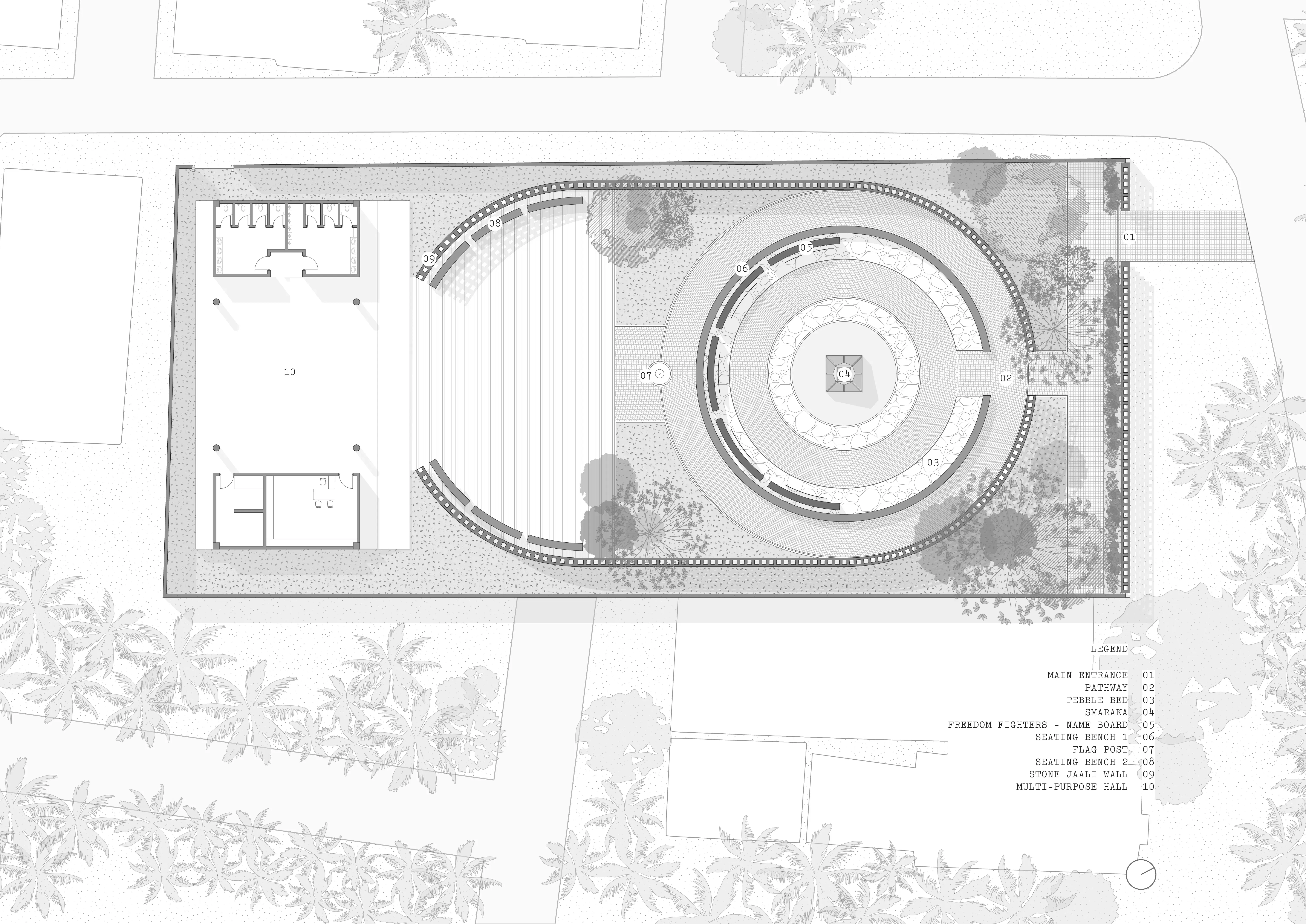
SITE PLAN
SITE PLAN

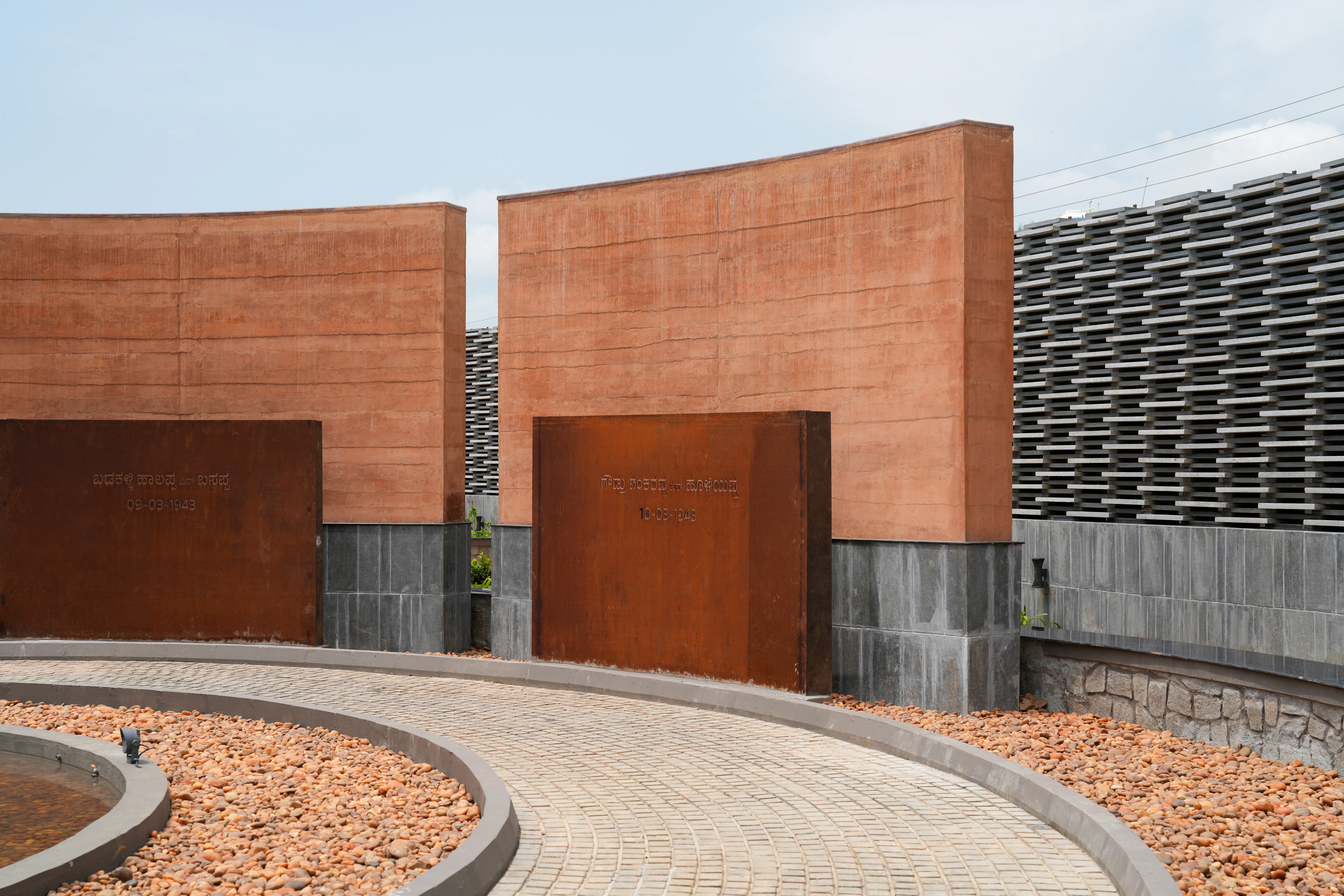
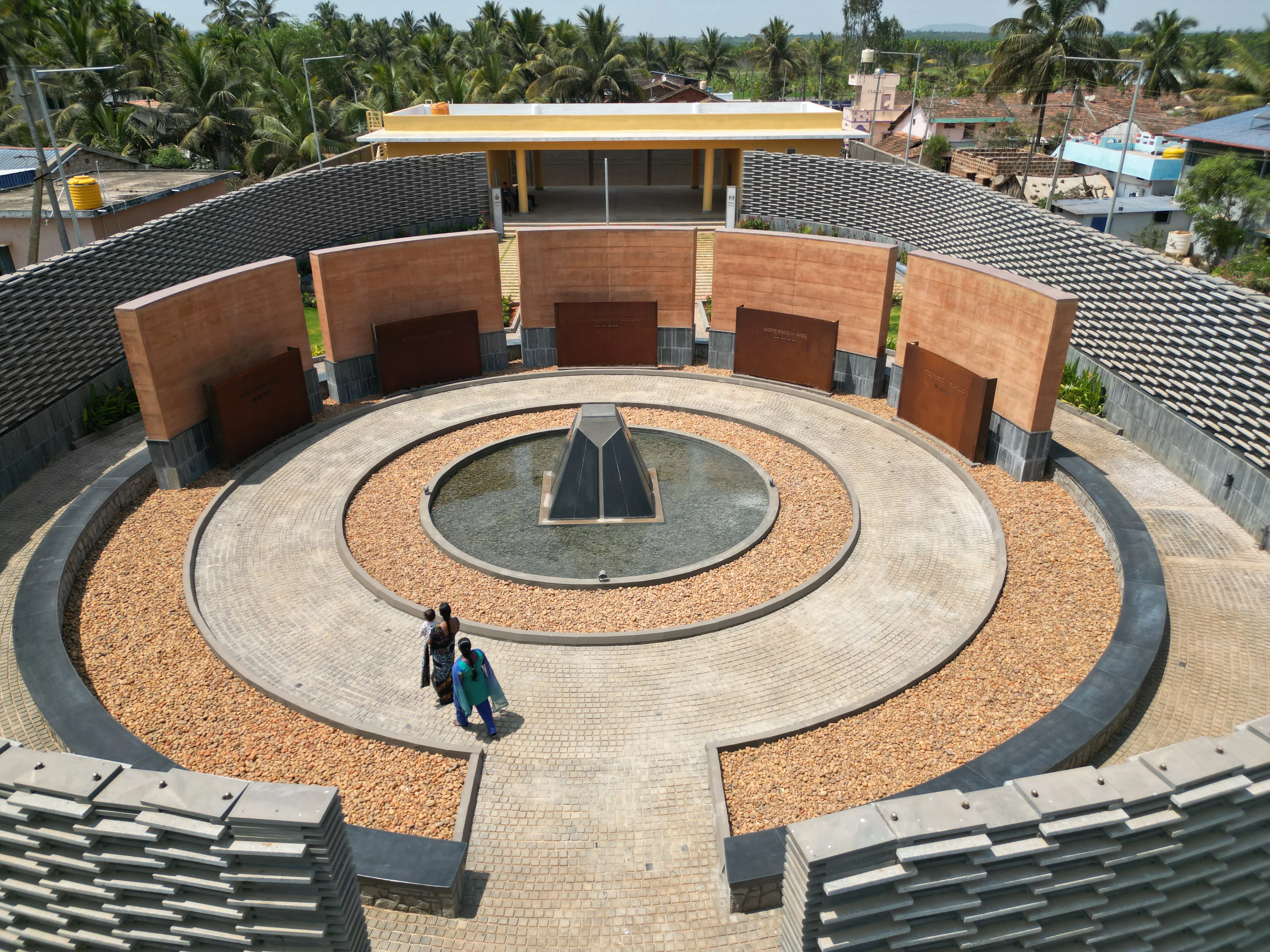
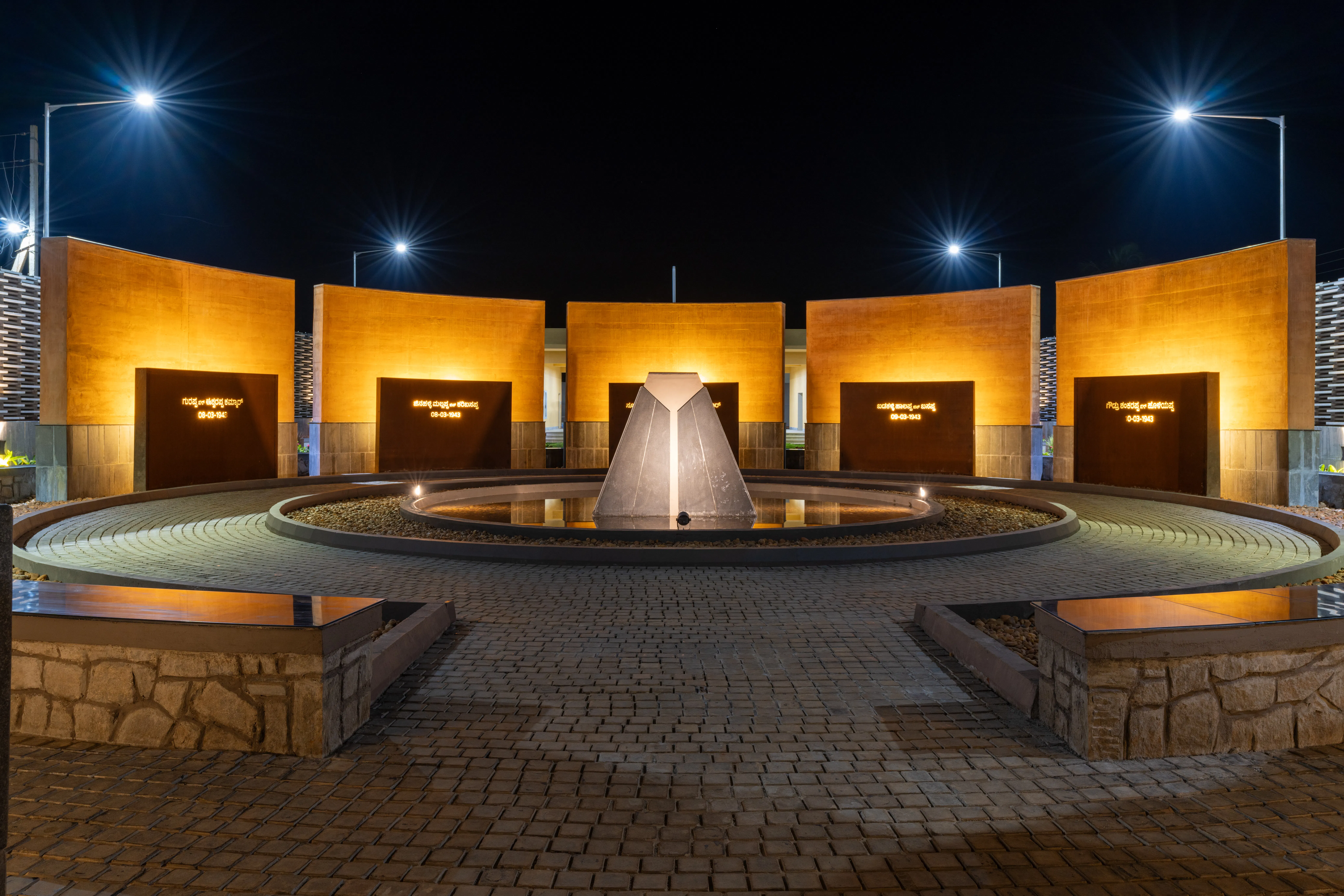
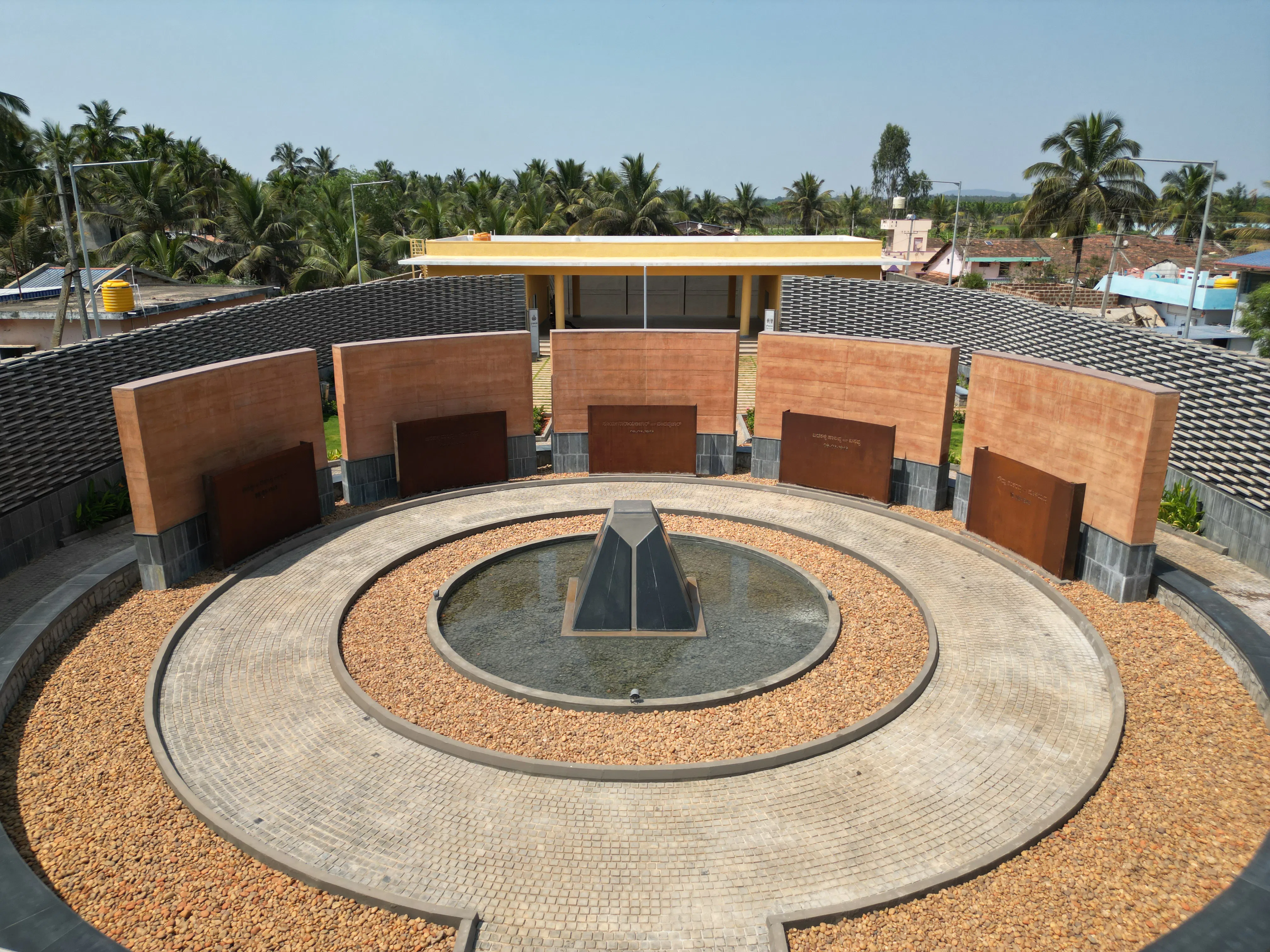
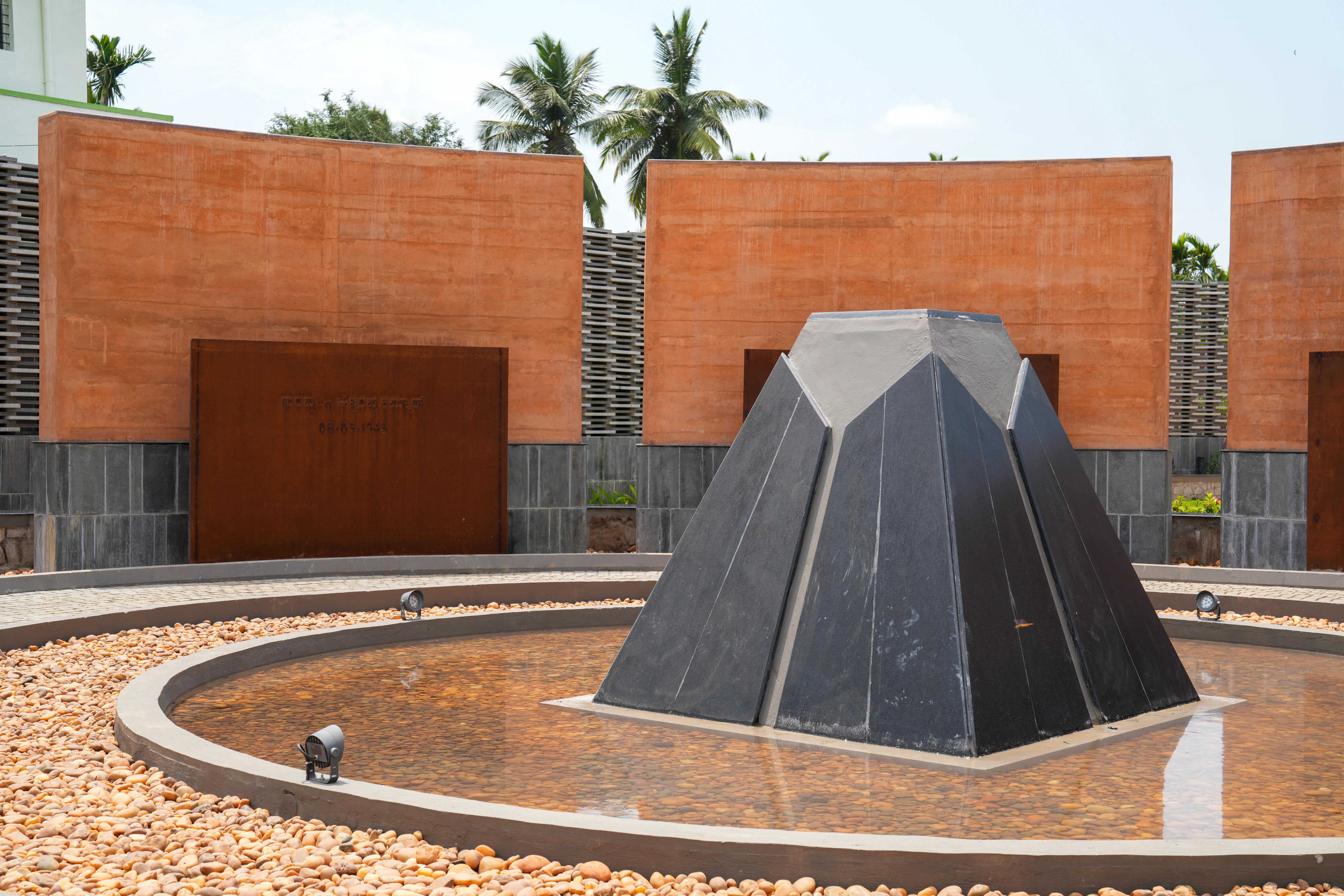
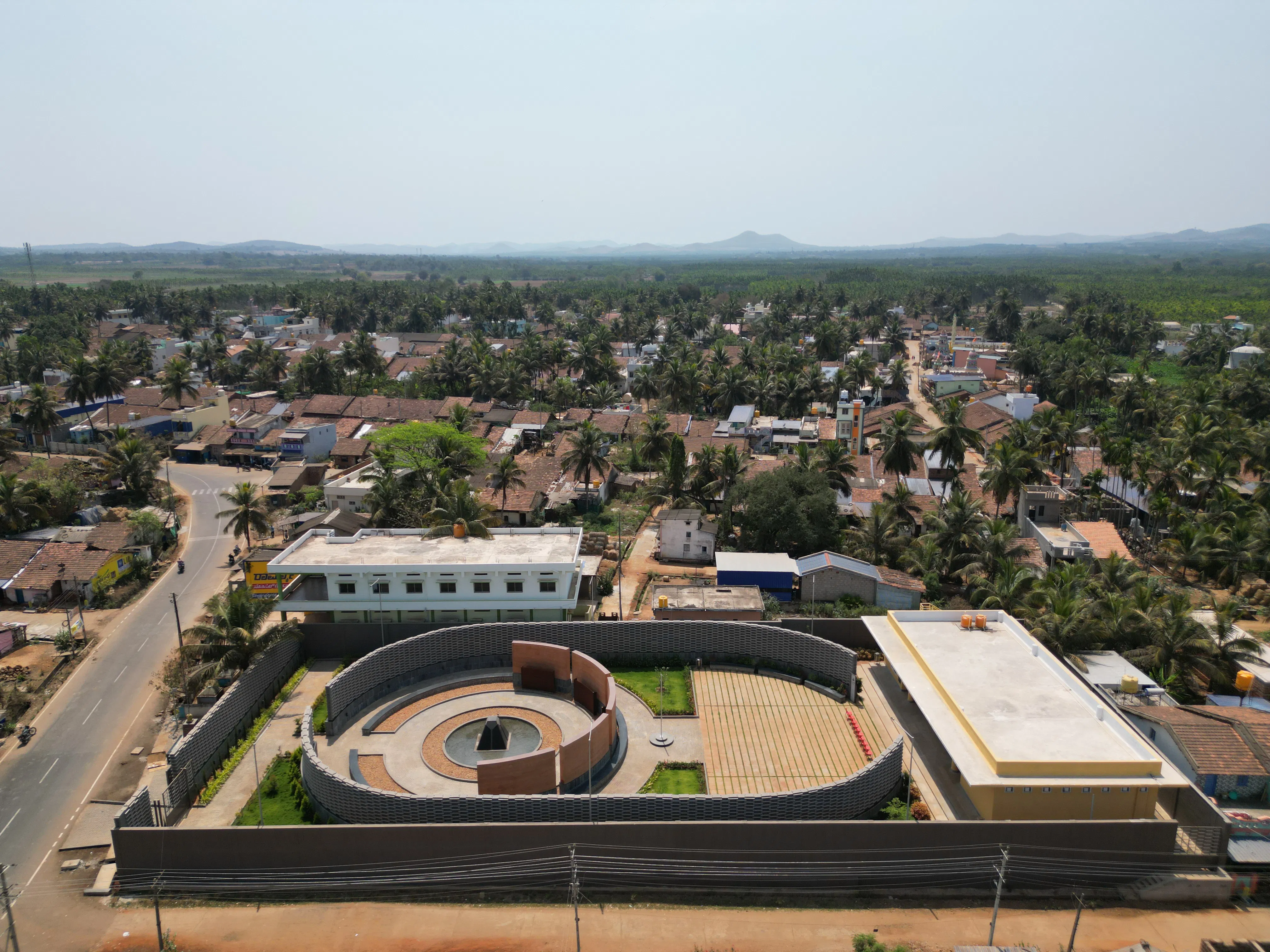
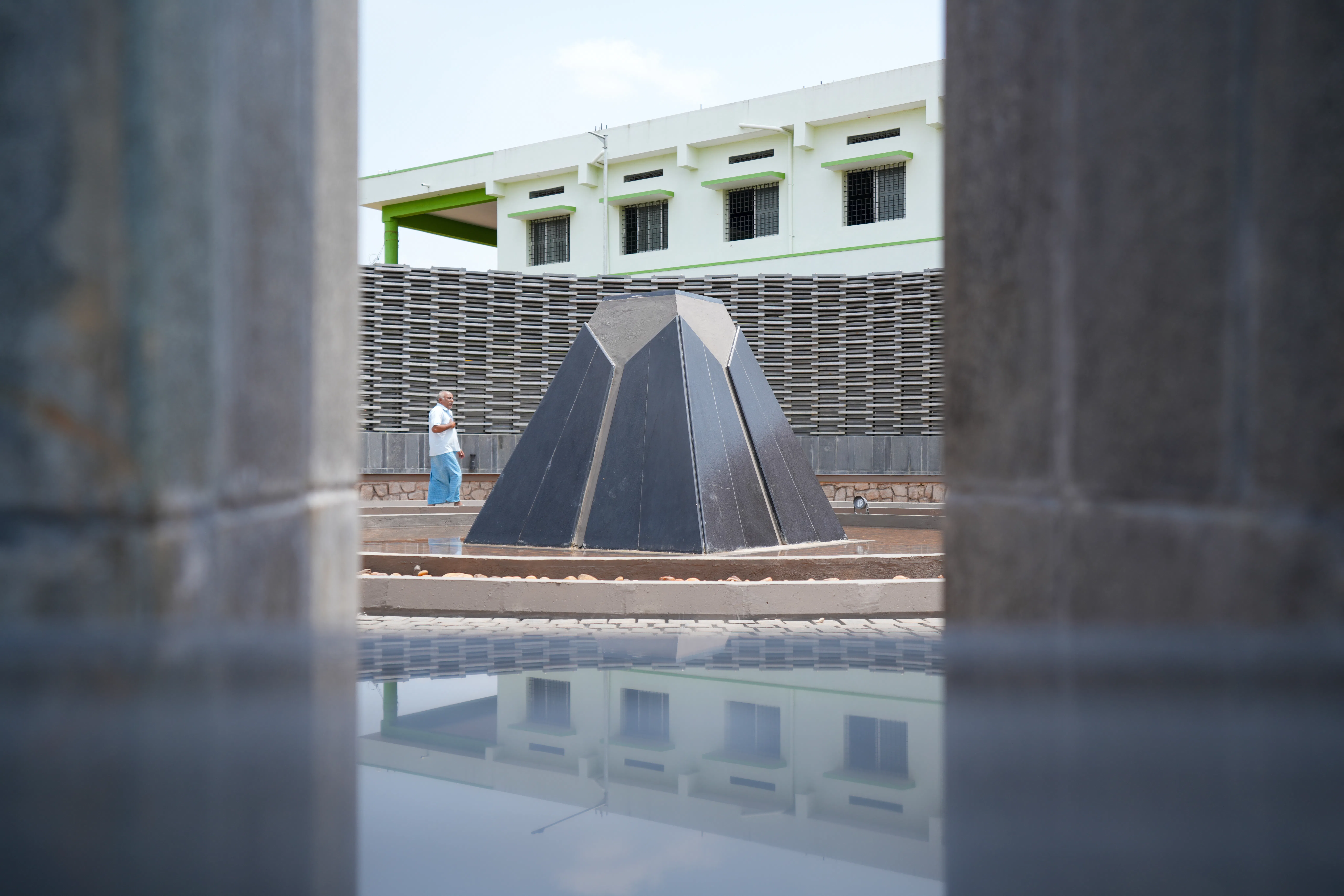
The design is organised around the existing memorial (Smaraka), which has been carefully retained and re-clad in natural stone to reinforce its presence within the site. Around it, five rammed earth walls are arranged in a gentle semi-circle, each representing one of the five martyrs who led the historic uprising.

VIEW OF THE SMARAKA
VIEW OF THE SMARAKA
MARTYR'S WALL
MARTYR'S WALL

Corten steel nameplates are integrated into the walls, providing a simple and enduring expression of remembrance. The composition establishes a dialogue between the existing memorial and the new intervention, allowing visitors to experience the site as a sequence of spaces rather than a singular monument.
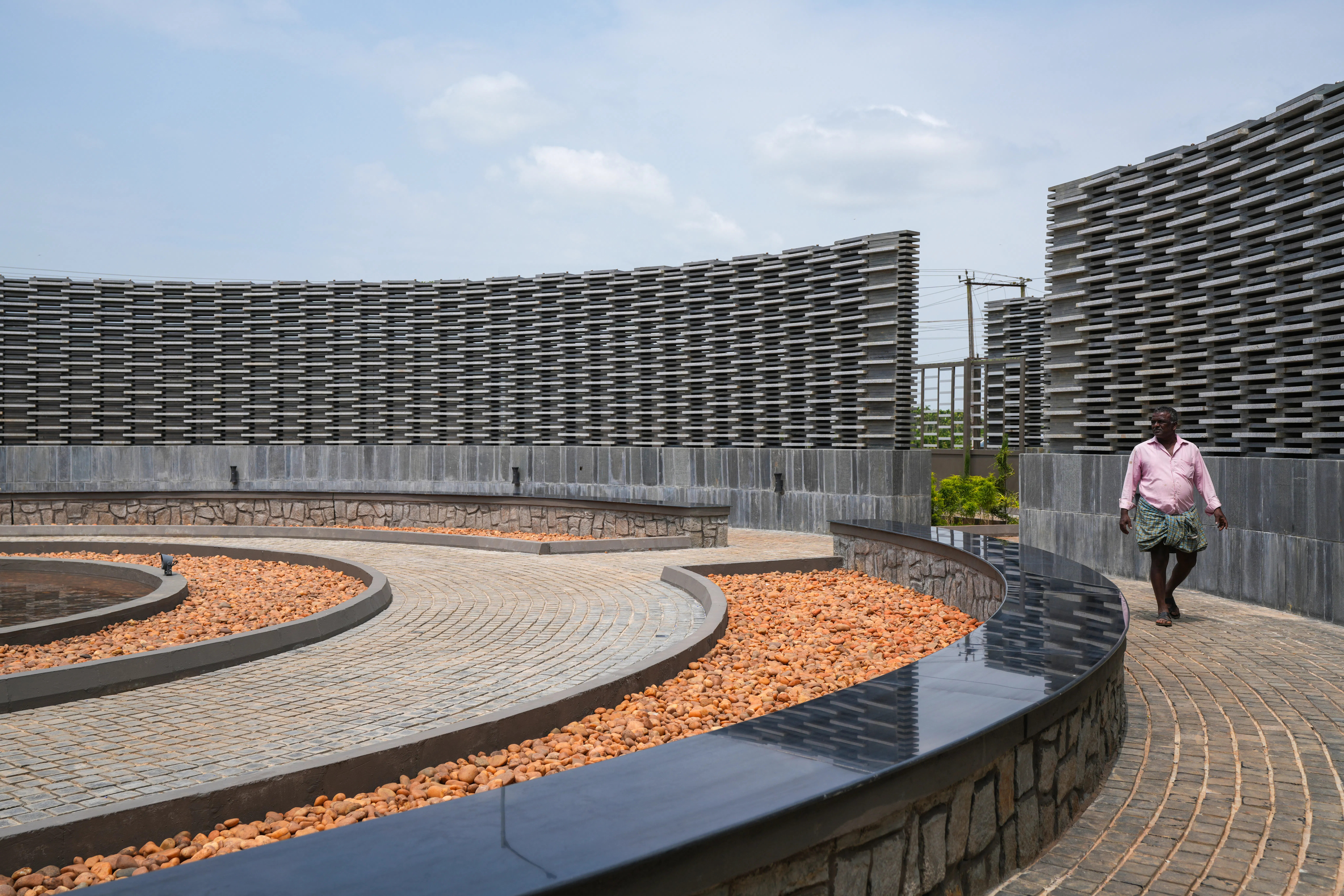
PATHWAY & SEATING AROUND THE SMARAKA

The arrangement creates a setting that supports quiet reflection while maintaining openness and accessibility for visitors throughout the year.
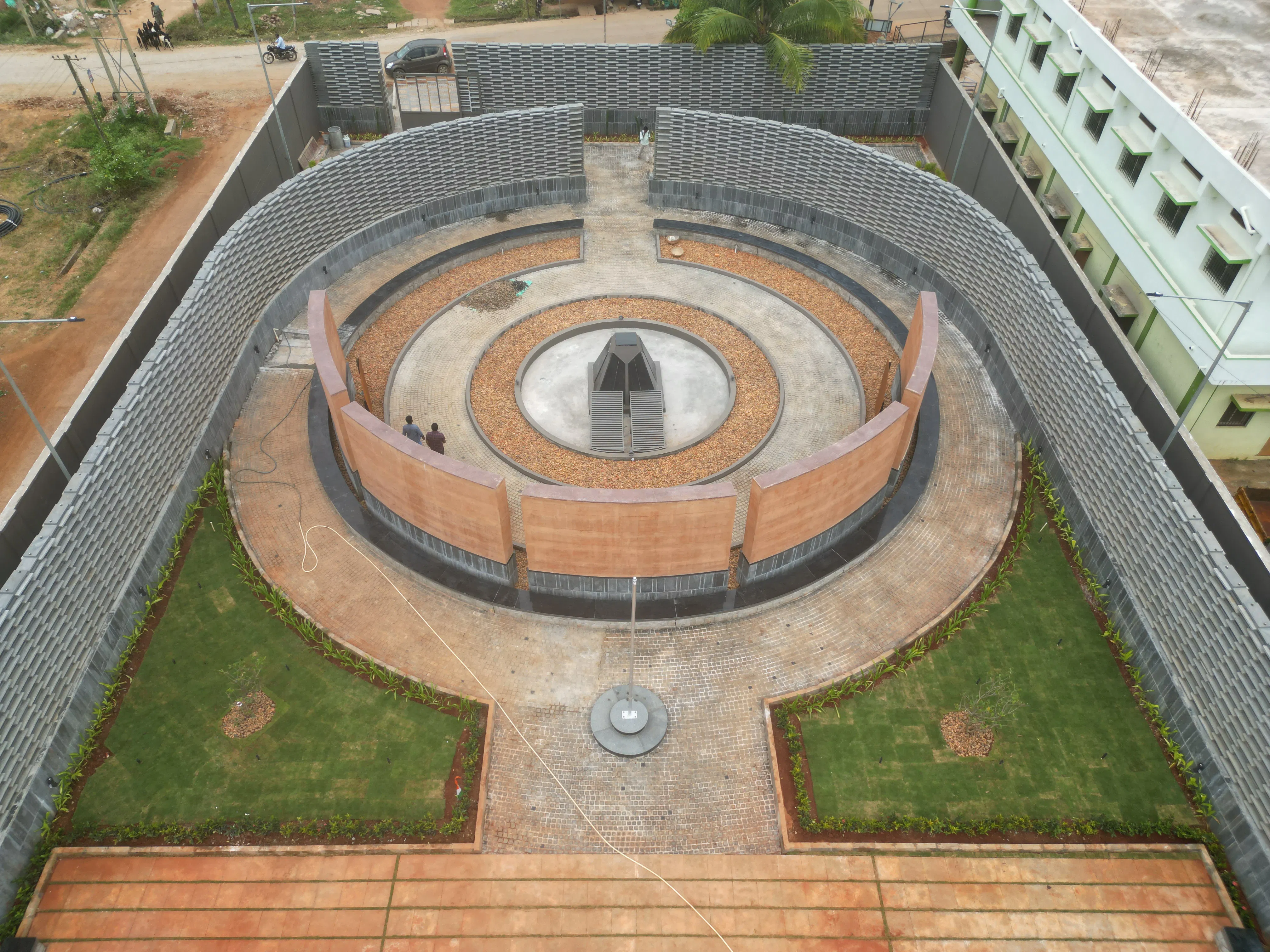
AERIAL VIEW OF THE MARTYR'S WALL DISPLAY RADIATING AROUND THE SMARAKA

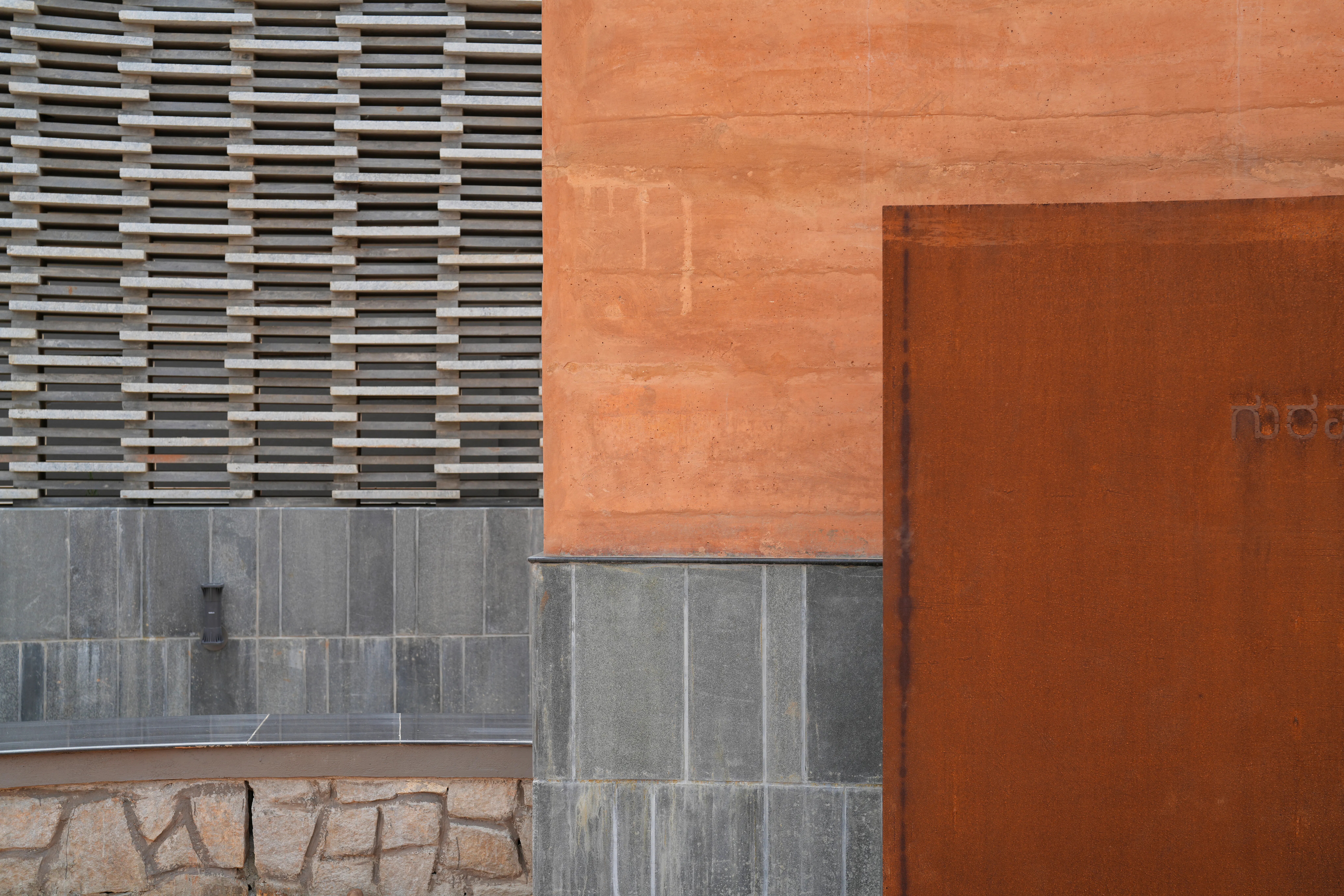
The project draws upon materials that are closely connected to the landscape and building traditions of the region.

Rammed earth forms the primary architectural element, expressing permanence through natural texture, colour, and craftsmanship. Over time, the walls are intended to age with dignity, allowing the memorial to remain connected to its surroundings.

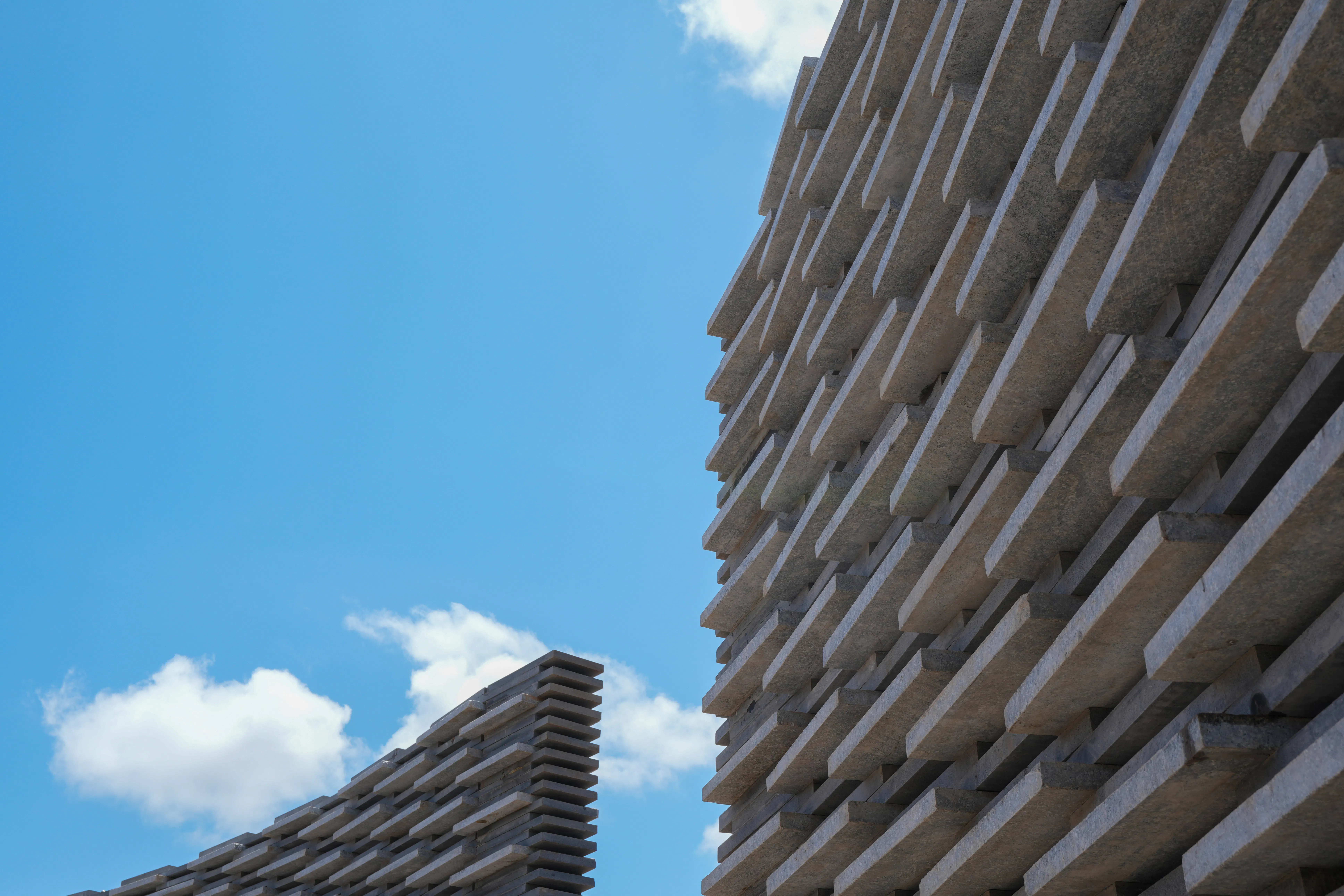

The existing Smaraka has been re-clad in locally sourced stone, while Corten steel introduces a restrained contemporary layer that complements the earthy palette. Together, these materials establish a balance between memory, landscape, and time.
Material Expression
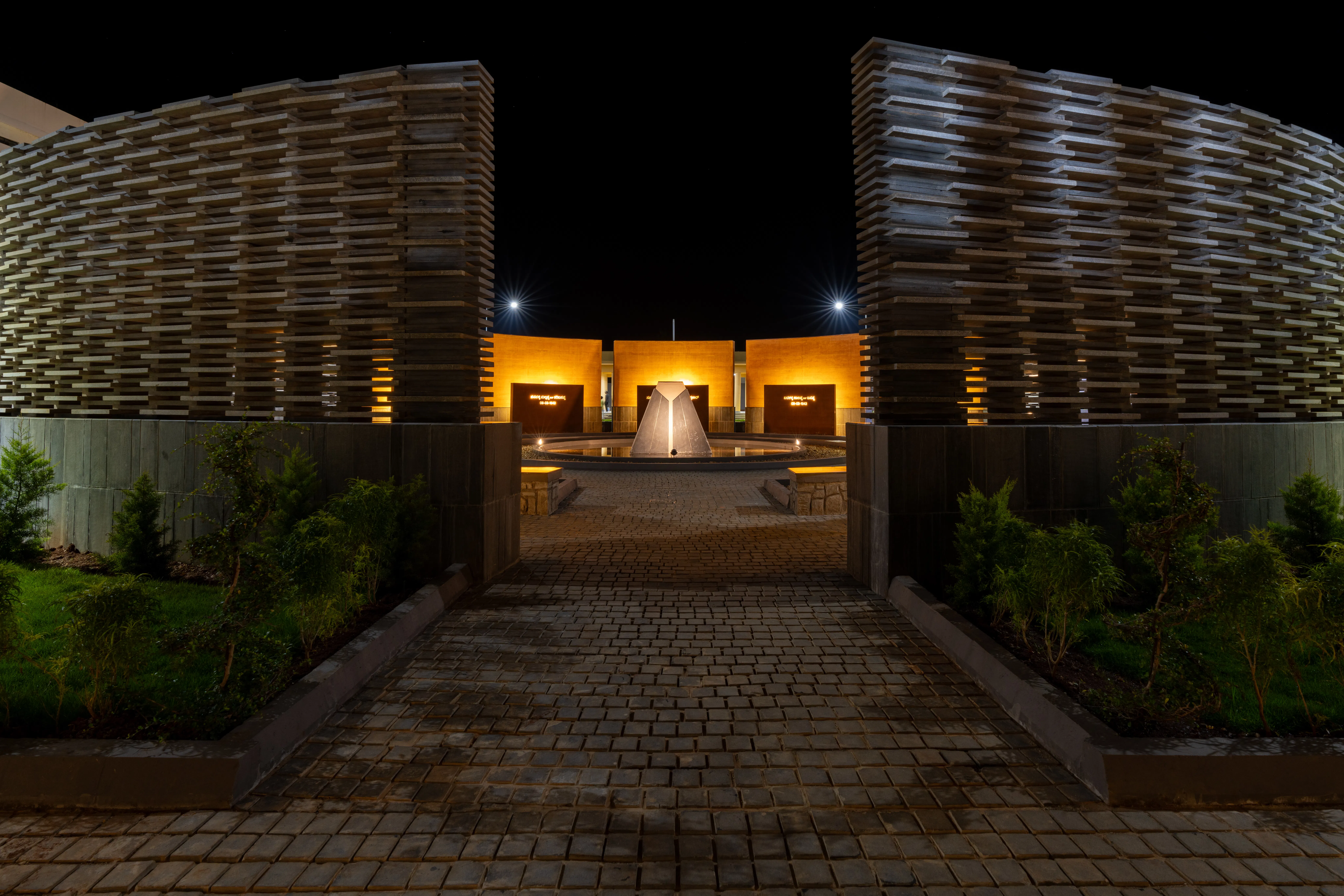
STONE JAALI, RAMMED EARTH WALL & CORTEN STEEL SIGNAGE
AERIAL VIEW OF THE MEMORAL IN THE VILLAGE CONTEXT
VIEW OF SMARAKA DURING NIGHT
BACKLIT MARTYRS WALL AND SMARAKA DURING NIGHT

The Isuru Memorial explores how architecture can contribute to preserving collective memory through spatial experience rather than symbolic form alone.

The project relies on scale, materiality, light, and landscape to create an environment that invites contemplation. Each architectural element is designed to support the larger narrative of the site without overwhelming the existing memorial or the historical significance of the place.

The relationship between built form and open space allows the memorial to function both as a place of remembrance and as a civic space that remains active and relevant to the local community.
Architecture and Memory
THE MEMORIAL BUILT AROUND THE SMARAKA
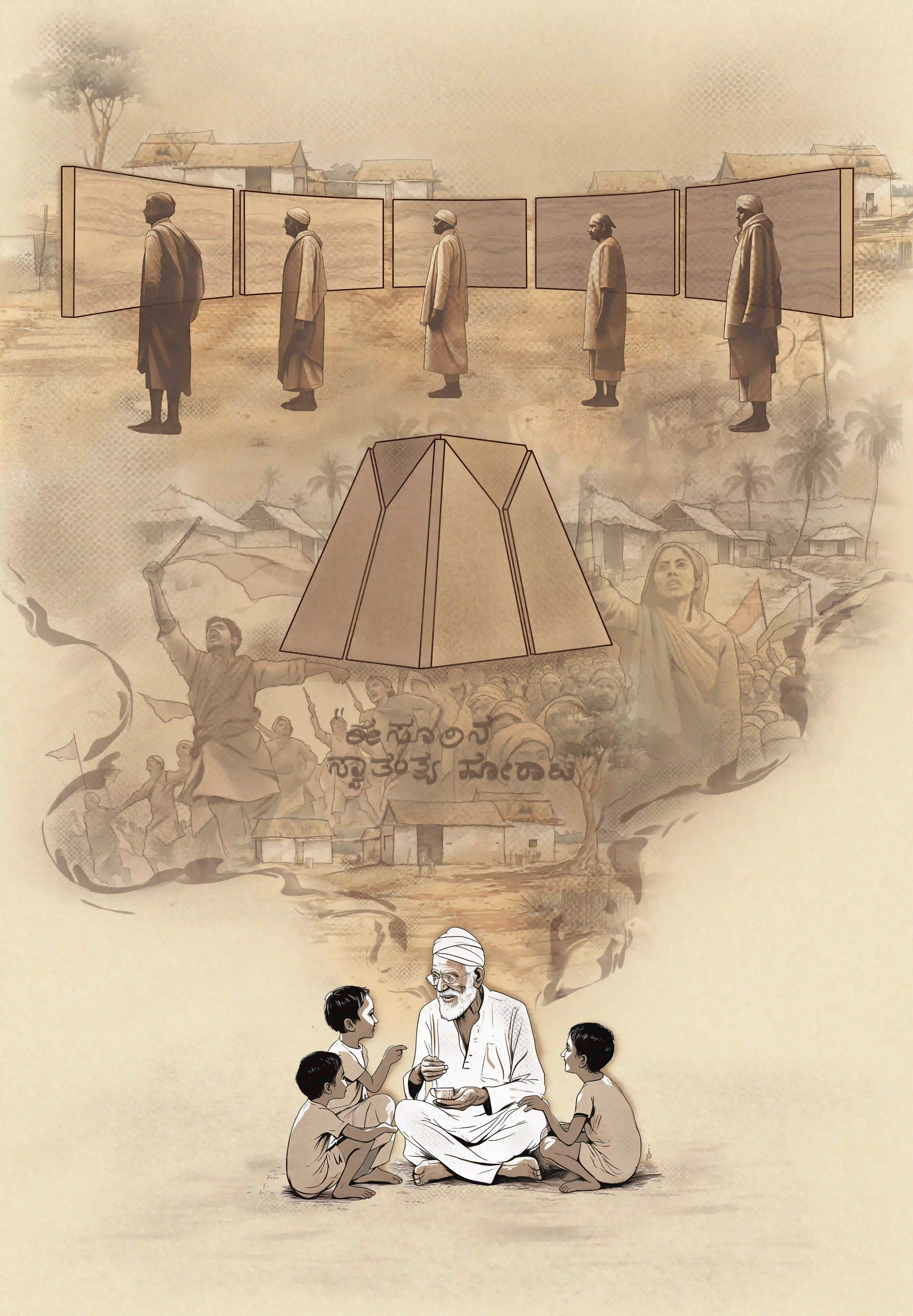
ILLUSTRATION DEPICTING THE HISTORY OF ISURU AND ITS MARTYRS

The Isuru Memorial brings together history, architecture, and landscape within a modest yet meaningful public setting. Through the careful use of local materials, sensitive conservation of the existing memorial, and the creation of spaces for gathering and learning, the project strengthens the connection between the past and the present.

The memorial demonstrates how architecture can support cultural continuity by creating places that are rooted in context, respectful of history, and accessible to future generations. Rather than commemorating an event through monumentality, it offers a setting where remembrance becomes part of everyday public life.

PROJECT OUTCOME